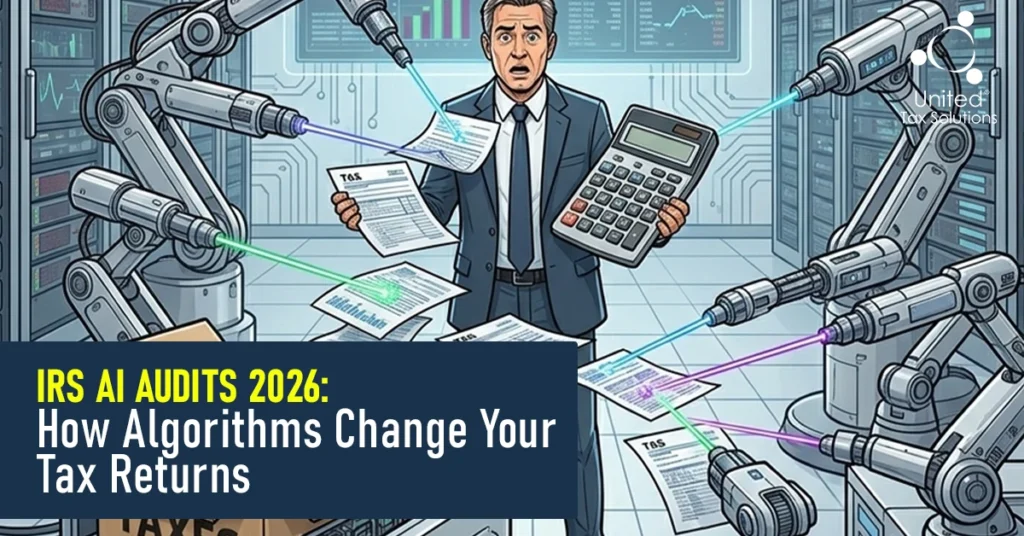
Tax season has entered a brave new world. If you feel like the rules of the game have changed, you’re right. By 2026, the Internal Revenue Service (IRS) has shifted its focus from human oversight to powerful artificial intelligence to close the “tax gap”—the estimated $496 billion in unpaid taxes owed each year.
The Rise of the “Megascanners”
The days of IRS employees manually typing in your tax data are over. The agency recently cut its workforce by roughly 25%, eliminating thousands of data-entry roles. In their place, the IRS now uses “megascanners” that can process and digitize your entire tax return in seconds.
This transition means the IRS now has more precise information than ever before. From your W2s and K1s to your business expense reports, everything is cross-referenced instantly by algorithms that never sleep.
Common Audit Triggers in the AI Era
Because the IRS now operates over 129 different AI use cases—up from just 54 in 2024—the system is incredibly efficient at flagging “unusual” behavior. Your return is no longer just being compared to a checklist; it is being analyzed against your entire tax history and industry patterns.
- Significant Income Fluctuations: Drastic changes in year-over-year income without clear explanation.
- Extreme Deduction Ratios: Business expenses that seem disproportionately high compared to your total revenue.
- The “Round Number” Trap: Using rounded numbers (e.g., $5,000 instead of $4,982.50) suggests estimates rather than actual record.
- Underreported Self-Employment Income: AI analyzes patterns across various digital platforms to find missing income.
Specialized Models for Complex Returns
- Large Partnership Compliance Model: Specifically targets hedge funds, private equity, and real estate operations.
- Line Anomaly Recommender: Used for corporations with assets between $10 million and $250 million to identify technical reporting errors.
- Individual Taxpayer Model: A system that recommends the top three issues most likely to need adjustment on any given return.
The Risks: Bias and Privacy Concerns

How to Protect Yourself
Get in Touch Today!
Listen to this new in our podcast!